
GWO BST Modules: A Guide for Wind Energy Personnel
GWO BST Modules for Wind Energy Personnel Wind turbine technicians work at height, inside confined nacelles, and often far from emergency services. That combination of exposure and isolation is why the wind industry built a common safety standard before it built anything else. GWO BST modules give technicians, installation crews, and maintenance teams the shared […]
GWO BST Modules for Wind Energy Personnel
Wind turbine technicians work at height, inside confined nacelles, and often far from emergency services. That combination of exposure and isolation is why the wind industry built a common safety standard before it built anything else. GWO BST modules give technicians, installation crews, and maintenance teams the shared knowledge and hands-on skills needed to prevent incidents and respond correctly when something goes wrong on a turbine site.
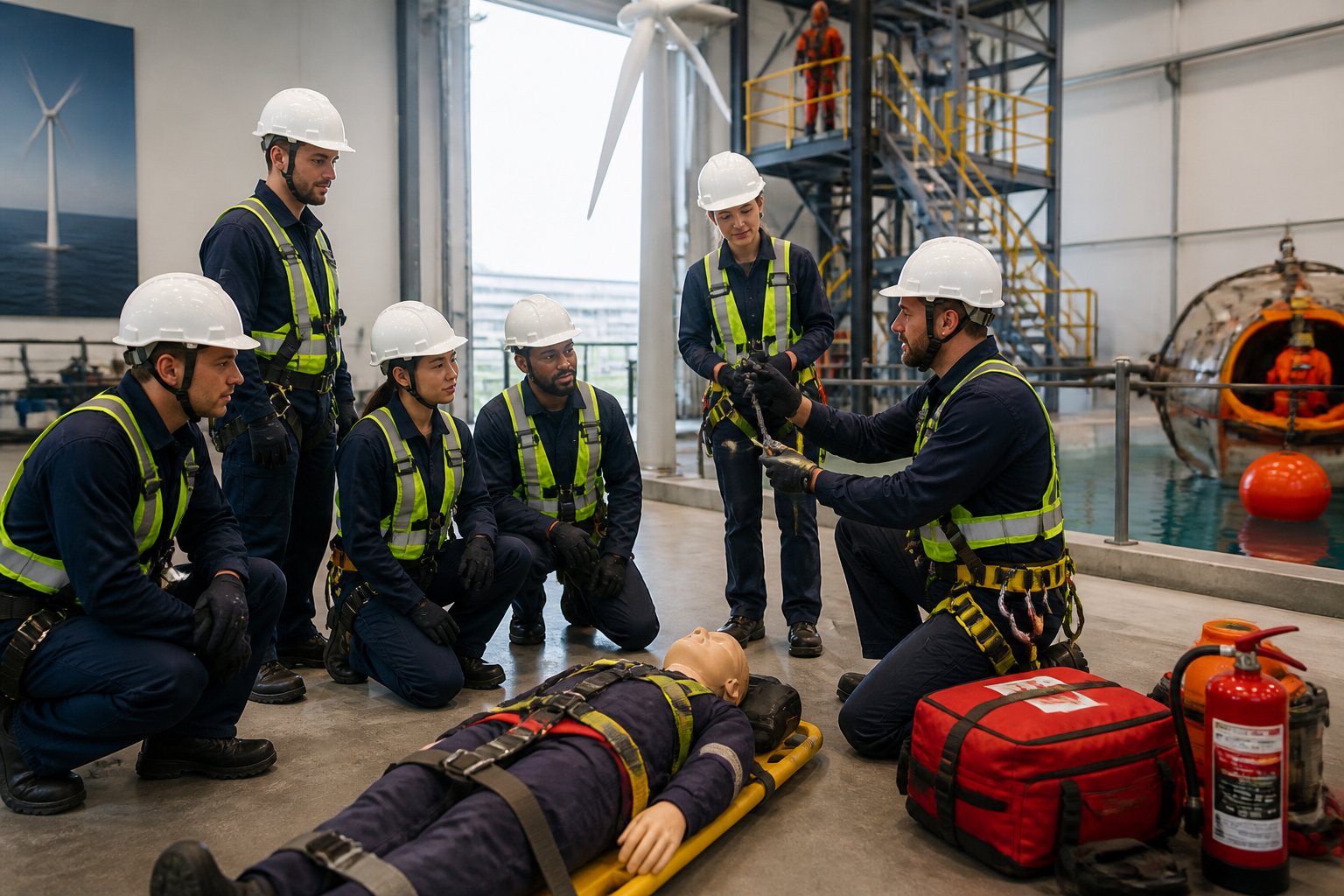
For employers, GWO Basic Safety Training also solves a practical workforce problem. It gives a consistent way to confirm that anyone entering a wind turbine environment, whether a new technician or an experienced installer moving between projects, has met the same recognized baseline for first aid, working at height, fire awareness, manual handling, and, where offshore work applies, sea survival. Oxford Global Training Academy (OGTA) works with organizations across the renewable energy industry to strengthen this kind of safety readiness through practical HSE training and emergency-preparedness support.
Key Takeaways
- GWO BST sets a common safety baseline covering first aid, working at height, manual handling, fire awareness, and sea survival for offshore roles.
- Each module builds specific, practical skills for real turbine emergencies, not just classroom theory.
- Employers and technicians should confirm current GWO requirements, course configuration, and refresher timelines before booking training.
The Safety Baseline for Wind Turbine Personnel
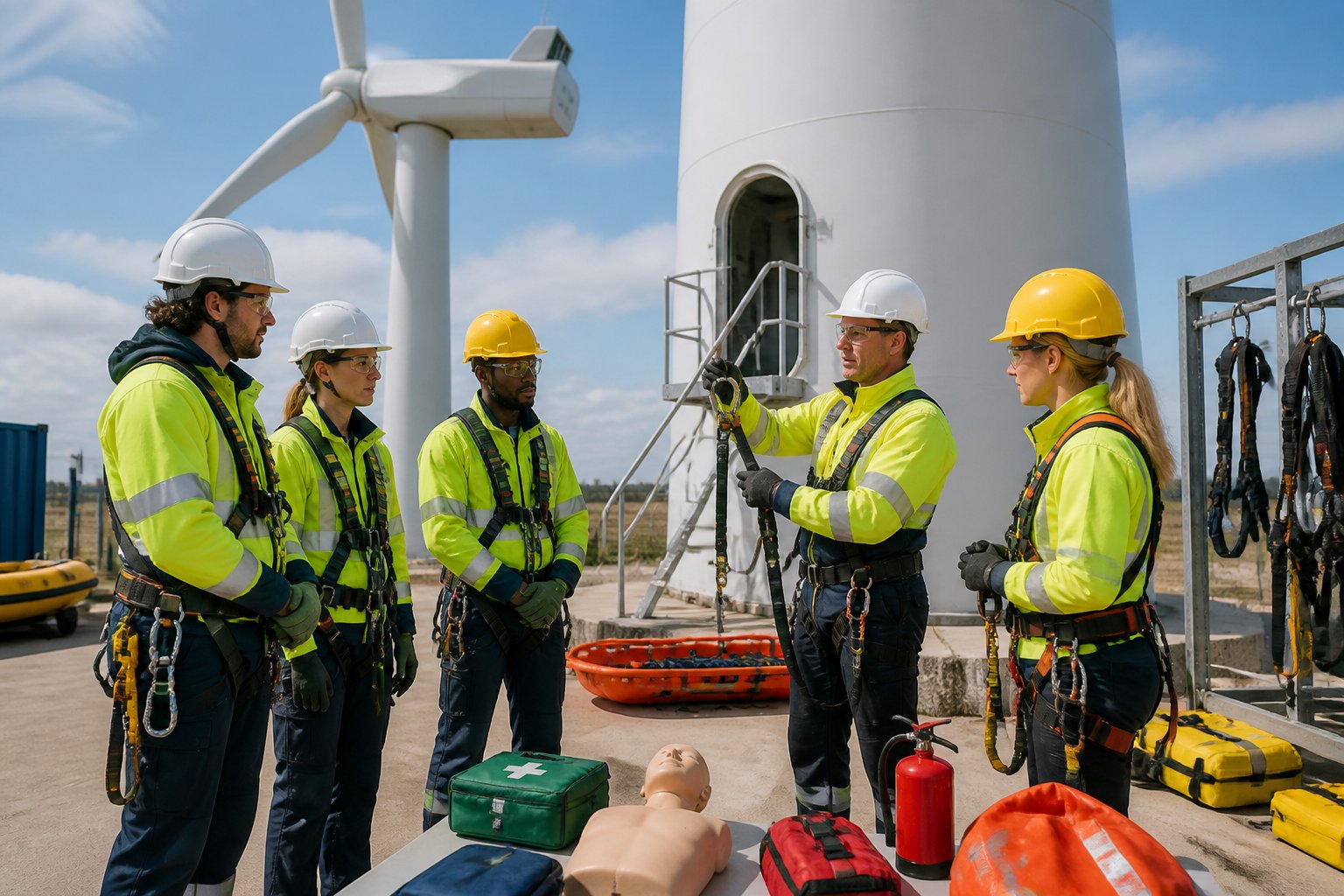
GWO Basic Safety Training exists to give every person entering a wind turbine environment the same core survival and hazard-response skills, regardless of employer or country. The Global Wind Organisation (GWO), formed in 2009 by major wind energy companies, turbine manufacturers, and owners, developed this standard to reduce inconsistency in safety preparation across the wind turbine industry.
What GWO and the Basic Safety Training Standard Are Designed to Achieve
GWO is an industry body, not a government regulator. It sets training standards that member companies and the wider wind turbine industry recognize as evidence of baseline competence.
The Basic Safety Training Standard is built around one core aim: enabling personnel to support and care for themselves and others while working in the industry. That includes recognizing hazards, using protective equipment correctly, and acting decisively during an emergency.
The Core GWO BST Modules and Sea Survival
GWO BST typically includes five modules: First Aid, Manual Handling, Fire Awareness, Working at Heights, and Sea Survival. The first four apply to onshore and offshore installation work alike, covering the hazards found in any wind farm setting.
Sea Survival applies specifically to offshore wind personnel. It prepares technicians for water evacuation, sea rescue, and survival techniques relevant to offshore platforms and vessels, and is generally required only where the job role involves offshore transit or installation work.
How GWO Training Standards and Requirements for Training Work Together
GWO training standards describe the learning objectives, but employers, site owners, and project duty holders decide which modules apply to which roles. As a general principle, anyone in physical contact with a wind turbine will need one or more BST modules relevant to their job function.
This shared responsibility means training requirements can vary by site, contract, and country, so confirming current requirements with the employer or project owner before enrolling is a necessary step.
Working at Heights and First Aid in Turbine Emergencies
Working at Heights and First Aid address two of the most immediate risks technicians face inside a turbine: falls and injuries in a confined, elevated space. Both modules combine theory with hands-on practice so participants can act under pressure, not just recall facts.
Working at Heights: Fall Protection, Rescue, and Controlled Descent
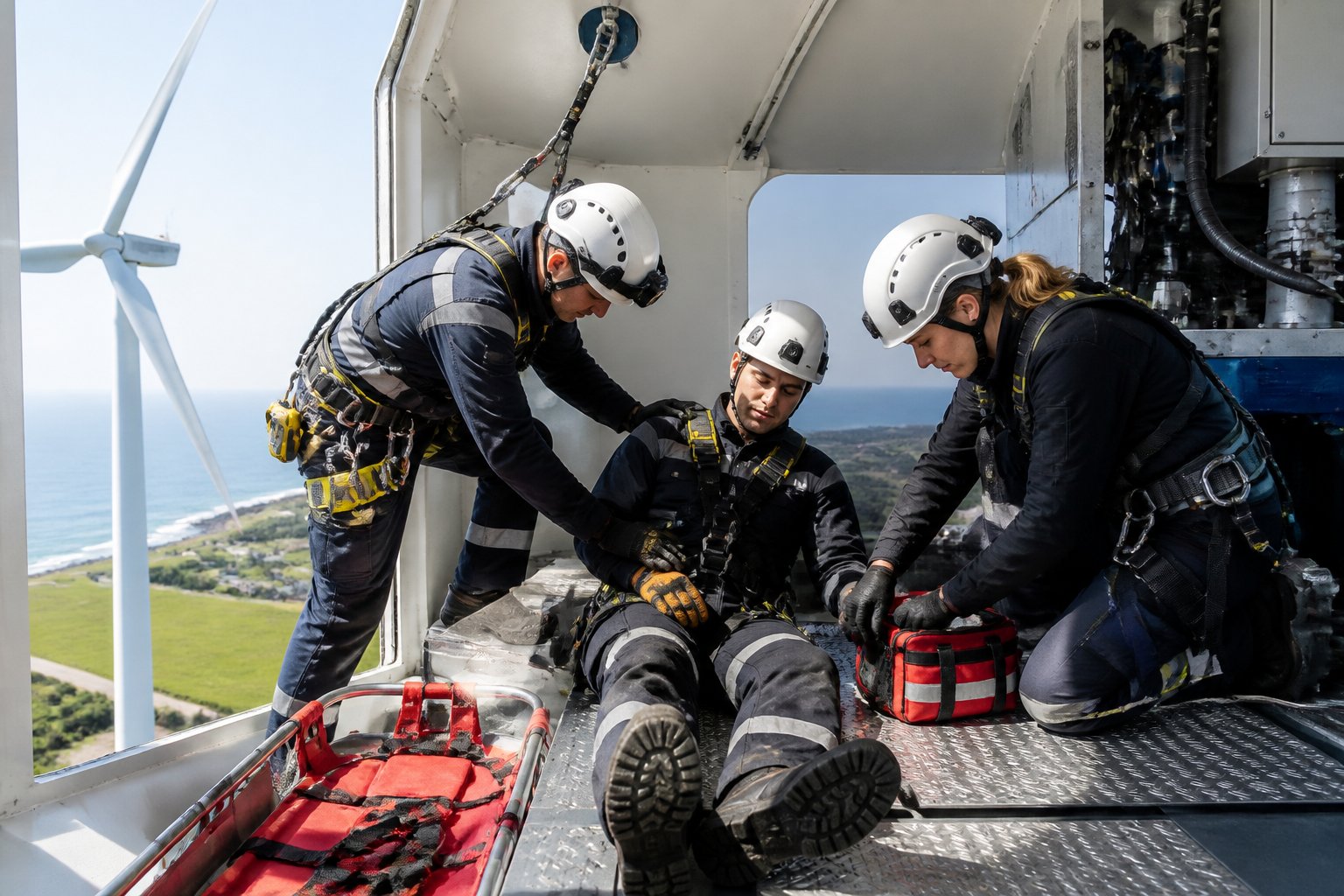
The Working at Heights module trains technicians to use personal protective equipment (PPE), fall protection systems, and fall arrest systems correctly before climbing a turbine tower. It also covers rescue techniques and rescue devices needed to bring an incapacitated colleague down safely.
Turbines present narrow ladders, confined platforms, and long vertical climbs. A technician who suffers a fall injury or medical event at height needs colleagues trained in controlled descent and emergency evacuation, since external rescue services can take considerable time to reach a remote wind farm.
Participants practice:
- Inspecting and fitting fall arrest systems correctly
- Performing basic rescue from height using rescue devices
- Coordinating an emergency evacuation from an elevated position
First Aid: CPR, AED Awareness, and Casualty Care
The First Aid module prepares participants to recognize life-threatening situations and respond before professional medical help arrives. Training covers CPR, awareness of automated external defibrillators (AEDs), and casualty care specific to the wind turbine environment.
Some providers offer an enhanced first aid option with deeper practical scenarios for personnel working in more isolated or higher-risk locations. Given the distance between many wind farms and emergency medical services, this module gives technicians the tools to stabilize a colleague and communicate clearly with responders during the wait for help.
Fire Awareness and Manual Handling for Everyday Risk Control
Fire Awareness and Manual Handling address risks that arise from routine turbine operations rather than dramatic single events. Both modules focus on prevention first, then correct response when a hazard becomes an incident.
Fire Awareness: Identifying Hazards, Prevention, and Evacuation
Fire Awareness training teaches participants to identify fire hazards specific to a nacelle or turbine base, including electrical systems and hydraulic fluids. Participants learn fire prevention practices, correct use of firefighting equipment, and evacuation procedures suited to a confined turbine structure.
Because a turbine fire in a nacelle can cut off a technician’s usual escape route, this module places heavy emphasis on emergency procedures that account for limited space and height. Recognizing early warning signs and reacting within the standard evacuation plan reduces the risk of technicians becoming trapped.
Manual Handling: Safer Movement and Musculoskeletal Injury Prevention
Manual Handling training reduces the risk of musculoskeletal injuries from lifting, carrying, and positioning heavy components and tools in tight turbine spaces. Technicians regularly move equipment through narrow hatches, up ladders, and across uneven platforms, conditions that increase strain compared with a standard warehouse or factory floor.
The module teaches correct lifting posture, load assessment, and team-lifting techniques suited to these confined, elevated work areas. Applying these techniques consistently lowers the rate of long-term injury across a technician’s career, not just on a single job.
Who Should Attend and How Training Records Are Managed
GWO BST applies to personnel whose role brings them into physical contact with a wind turbine during construction, installation, operations, or maintenance. Employers, not GWO itself, determine which specific modules each role requires.
Roles That Commonly Need GWO BST
Wind turbine technicians, installation crews, and maintenance personnel typically need the full BST suite relevant to their site type. Site supervisors, quality inspectors, and some engineering staff who regularly enter turbines or work at height on-site may also require BST modules, depending on employer and project rules.
Roles limited to ground-level or office-based work generally fall outside BST scope, though individual employers set the final requirement.
WINDA Registration, GWO Certificates, and Refresher Training
Training providers record successful completions in WINDA, GWO’s central database, which issues the corresponding GWO certificate for each completed module. This system allows employers and site owners to verify a technician’s current training status before deployment.
BST modules carry a defined validity period, after which a refresher course renews the certificate. Because validity periods and refresher content can change between standard versions, checking the current requirement against the applicable GWO standard version before scheduling refresher training is worthwhile.
What Employers Should Confirm Before Enrolling Teams
Employers should confirm which BST modules apply to each role, which GWO standard version the training provider follows, and current refresher timelines before booking. Site-specific or country-specific rules may add requirements beyond the core GWO standard.
Reviewing WINDA records regularly helps HSE managers track certificate status across a workforce and plan refresher training before certificates lapse.
Building Safer Wind Workforces With Practical GWO Training
GWO Basic Safety Training gives wind energy personnel a shared foundation in emergency procedures, personal protective equipment use, and rescue skills built for real turbine conditions. Each module, from Working at Heights to Manual Handling, addresses a specific and recurring risk that technicians face on site.
For employers, GWO BST supports a structured way to confirm workforce readiness and track certification through WINDA. For individuals, it builds practical competence that supports safer decision-making during routine work and emergencies alike.
OGTA works with organizations and personnel across the renewable energy industry to strengthen HSE training, hands-on emergency preparedness, and workplace safety practices. Readers planning GWO BST training or assessing workforce compliance can direct enquiries to OGTA through www.ogta.in for guidance suited to their site and role requirements.
Frequently Asked Questions
What are the GWO BST modules?
GWO BST typically includes First Aid, Manual Handling, Fire Awareness, and Working at Heights, with Sea Survival added for offshore roles. Each module combines theory and practical exercises focused on wind turbine hazards. Exact module configuration can vary by standard version, so confirming current requirements with a training provider is recommended.
Is Sea Survival included in GWO Basic Safety Training?
Sea Survival is part of the full GWO BST suite for personnel working in offshore wind roles. Onshore-only technicians generally complete the four core modules without Sea Survival. Employers determine which modules apply based on the specific project and work location.
Who needs GWO BST to work in the wind energy industry?
Anyone whose role brings them into physical contact with a wind turbine during construction, installation, operations, or maintenance typically needs one or more BST modules. Employers and site owners set the exact requirement for each role. Ground-based or purely administrative roles usually fall outside this requirement.
How are GWO BST records managed in WINDA?
Training providers record successful module completions in WINDA, GWO’s central training database. Employers and site owners use WINDA to verify a technician’s current certificate status before assigning them to a project. This system helps track validity periods across a workforce.
When should GWO BST refresher training be completed?
BST modules carry a set validity period, after which a refresher course is required to keep certification current. Refresher timelines can change between GWO standard versions, so checking the current requirement before scheduling is important. Employers should track certificate expiry dates through WINDA to avoid lapses.
Can OGTA help with GWO training enquiries in India?
OGTA supports organisations and individuals across India’s renewable energy sector with HSE training guidance, emergency-preparedness support, and workplace safety expertise. Readers can direct GWO training enquiries to OGTA through www.ogta.in for guidance suited to their site and role. OGTA does not set GWO standards but can help connect training needs to appropriate safety planning.