Confined Space Training
Welcome to our comprehensive Confined Space Training course, designed to equip participants with the essential knowledge and skills required to safely work in confined spaces. This course blends both theoretical and practical sessions to ensure a deep understanding of the subject matter.
Course Overview
| Course Name | Confined Space Training |
| Duration | 1 Day |
| Delivery Type | Theory & Practical |
| Languages Available | English and Local Language |
| Minimum Qualification Required | 8th Pass |
Course Description
Welcome to our comprehensive Confined Space Training course, designed to equip participants with the essential knowledge and skills required to safely work in confined spaces. This course blends both theoretical and practical sessions to ensure a deep understanding of the subject matter.
Who Should Attend?
This course is ideal for
- Workers who are required to enter or work in confined spaces.
- Supervisors and managers overseeing confined space operations.
- Safety personnel responsible for the safety of workers in confined spaces.
- Any individual seeking to enhance their knowledge and skills in confined space safety.
Course Objectives
By the end of this course, participants will be able to:
- Identify confined spaces and understand the associated hazards.
- Understand the legislative requirements and standards for confined space entry.
- Develop and implement effective risk assessment and control measures.
- Safely prepare for and execute confined space entry operations.
- Use appropriate personal protective equipment (PPE) and safety gear.
- Respond to confined space emergencies with confidence and competence.
Training Methodology
Our training methodology includes:
- Interactive Lectures: Engaging and informative sessions led by experienced trainers.
- Group Discussions: Collaborative discussions to reinforce learning.
- Case Studies: Real-life scenarios to understand practical applications.
- Practical Exercises: Hands-on training to apply theoretical knowledge.
Assessment And Certification
Participants will undergo a short assessment at the end of the course to evaluate their understanding of the material covered. Successful participants will receive a certificate of completion, recognizing their commitment to workplace safety.
Assessment Process
The assessment is designed to evaluate participants’ understanding of the important topics covered throughout the course. Questions may focus on workplace hazards, safe working procedures, emergency arrangements, personal protective equipment, and appropriate preventive measures.
Participants are encouraged to take an active role during the training sessions and ask questions whenever clarification is required. This helps ensure that learners have a clear understanding of the course material before completing the assessment.
Practical Evaluation
Where applicable, the assessment may also include practical activities. These exercises allow participants to demonstrate how they would apply the knowledge gained during the training in realistic workplace situations.
Practical activities may include identifying potential hazards, understanding appropriate control measures, following established procedures, communicating safety concerns, and responding appropriately to simulated situations. Trainers provide guidance throughout these activities to help participants develop confidence and awareness.
Trainer Feedback
Feedback from experienced trainers can help participants understand their strengths and identify areas that may require further attention. Learners have the opportunity to discuss questions, review important topics, and improve their understanding before completing the course.
This approach makes the assessment a useful part of the overall learning experience rather than simply a final test. It encourages participants to understand the reasons behind safety procedures and how they can be applied effectively.
Certificate of Completion
Participants who successfully meet the course requirements will receive a certificate of completion. This provides evidence that the learner has attended the required sessions and successfully completed the relevant assessment activities.
Organizations can maintain these certificates as part of their employee training records and use them to support their workplace safety and professional development programs.
Applying Knowledge in the Workplace
The knowledge gained during the course should be applied consistently in everyday work activities. Participants are encouraged to follow established safety procedures, use appropriate protective equipment, communicate hazards, and report unsafe conditions to the relevant personnel.
Organizations can reinforce this knowledge through regular safety meetings, workplace inspections, refresher sessions, and ongoing employee awareness activities. These measures can help maintain good safety practices and reduce the likelihood of workplace incidents.
For additional workplace safety programs, organizations can explore OGTA’s HSE Training services. OGTA also provides HSE Auditing services to help organizations review their safety practices and identify potential areas for improvement.
Continuous Improvement
Workplace safety requires ongoing attention and regular improvement. Completing the course provides participants with valuable knowledge, but continued practice and awareness are important for maintaining effective procedures.
Organizations should encourage employees to communicate potential hazards and participate in safety initiatives. Regular reviews can help identify changing workplace conditions and ensure that appropriate control measures remain effective.
For additional information and international guidance on occupational safety and health, participants can refer to the International Labour Organization (ILO).
Overall Outcome
The combination of theoretical learning, practical activities, assessment, trainer feedback, and certification provides participants with a structured learning experience. Successful completion demonstrates that learners have participated in the required training and assessment process.
The overall objective is to help participants develop stronger safety awareness, understand their responsibilities, and apply appropriate procedures in their workplace. This contributes to a safer and more responsible working environment for employees and organizations.
Course Content
- Introduction to Confined Spaces
- Importance of safety in the workplace
- Overview of safety regulations and standards
- Definition and types of confined spaces.
- Common hazards associated with confined spaces.
- Legislation and Standards
- Overview of relevant legislation and standards.
- Employer and employee responsibilities.
- Hazard Identification and Risk Assessment
- Identifying potential hazards in confined spaces.
- Conducting effective risk assessments.
- Control Measures
- Implementing control measures to mitigate risks.
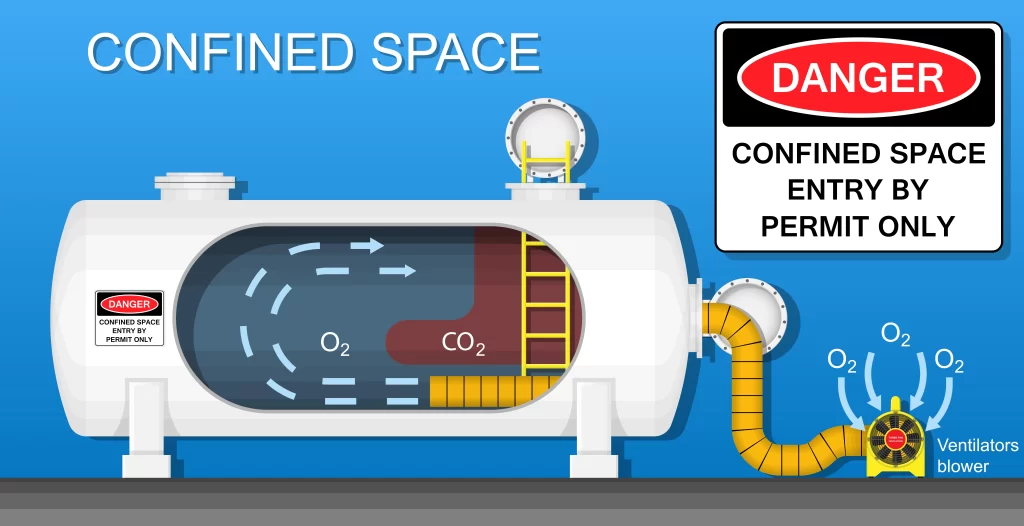
- Use of ventilation, isolation, and purging techniques.
- Personal Protective Equipment (PPE)
- Selection and use of appropriate PPE.
- Maintenance and inspection of PPE.
- Safe Entry Procedures
- Pre-entry preparation and checks.
- Entry permits and documentation.
- Emergency Procedures
- Developing emergency response plans.
- Rescue techniques and equipment.
- Practical Session
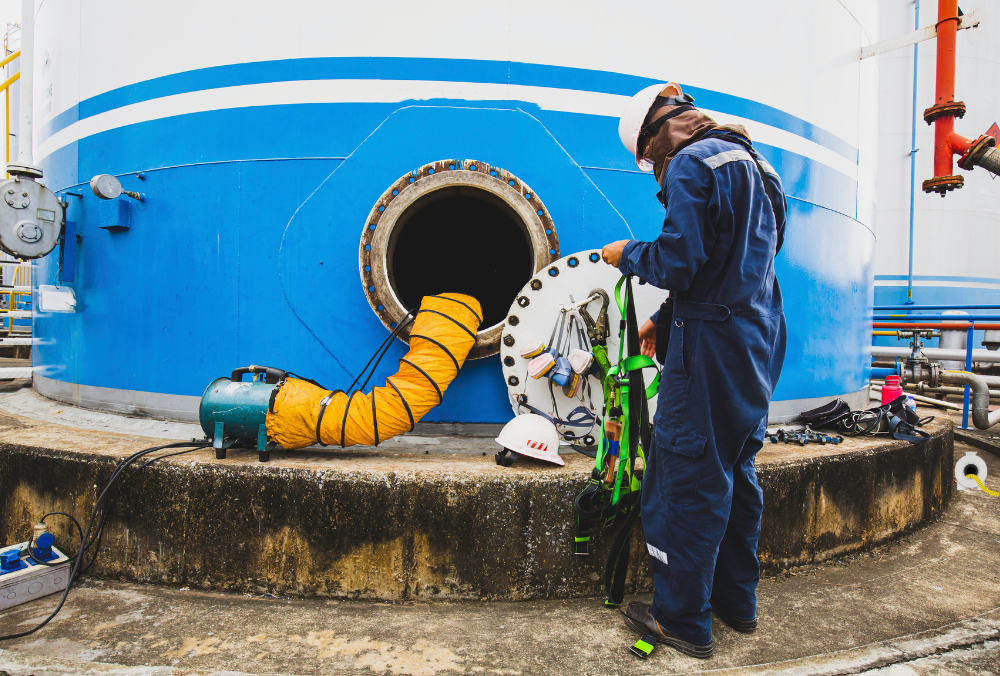
- Hands-on training in a simulated confined space environment.
- Practical exercises on hazard identification, PPE usage, and emergency response.